

How to boost your skin confidence: guide for men
Many young men quietly deal with the same frustration: you look in the mirror before a big day and all you can focus on is a breakout, uneven tone, or redness that wasn’t there yesterday. It chips away at your confidence before you’ve even walked out the door. The good news is that clearer skin directly enhances self-image, reducing social avoidance and boosting how you carry yourself in every room. This guide breaks down the exact habits, routines, and mindset shifts that make a visible difference, without overcomplicating your morning.
Table of Contents
- Why skin confidence matters for men
- What you need for a confidence-boosting skin routine
- Step-by-step guide: Building your daily skin routine
- Lifestyle habits that amplify skin confidence
- Troubleshooting: Common mistakes and when to see a dermatologist
- Next steps: Products and support for your skin confidence journey
- Frequently asked questions
Key Takeaways
| Point | Details |
|---|---|
| Daily routine wins | Simple, consistent daily routines outperform complicated approaches and lead to visible results. |
| Lifestyle matters most | Diet, sleep, exercise, and hydration amplify skin clarity and confidence far beyond products alone. |
| Avoid common mistakes | Patch test new products, use SPF every day, and seek dermatologist help if acne persists. |
| Confidence starts with skin | Improved skin clarity brings measurable gains in social confidence and self-esteem. |
Why skin confidence matters for men
Skin confidence isn’t vanity. It’s a real factor in how you perform socially, professionally, and personally. When your skin looks good, you stop second-guessing yourself in conversations, photos, and first impressions. That mental shift is powerful.
Research confirms that clearer skin enhances self-image in image-conscious young men, reducing avoidance behaviors and improving overall confidence. The role of skincare in appearance is more significant than most guys realize, and the payoff from even a basic routine shows up fast.
Here are the most common skin issues that knock confidence:
- Acne and active breakouts
- Uneven skin tone and redness
- Excess shine and oiliness
- Post-shave irritation and razor bumps
- Dark circles and puffiness
“Your skin is the first thing people notice. Taking care of it isn’t about looking pretty, it’s about showing up as the best version of yourself.”
The natural confidence from skincare that comes from a consistent routine isn’t just surface-level. It rewires how you see yourself over time.
What you need for a confidence-boosting skin routine
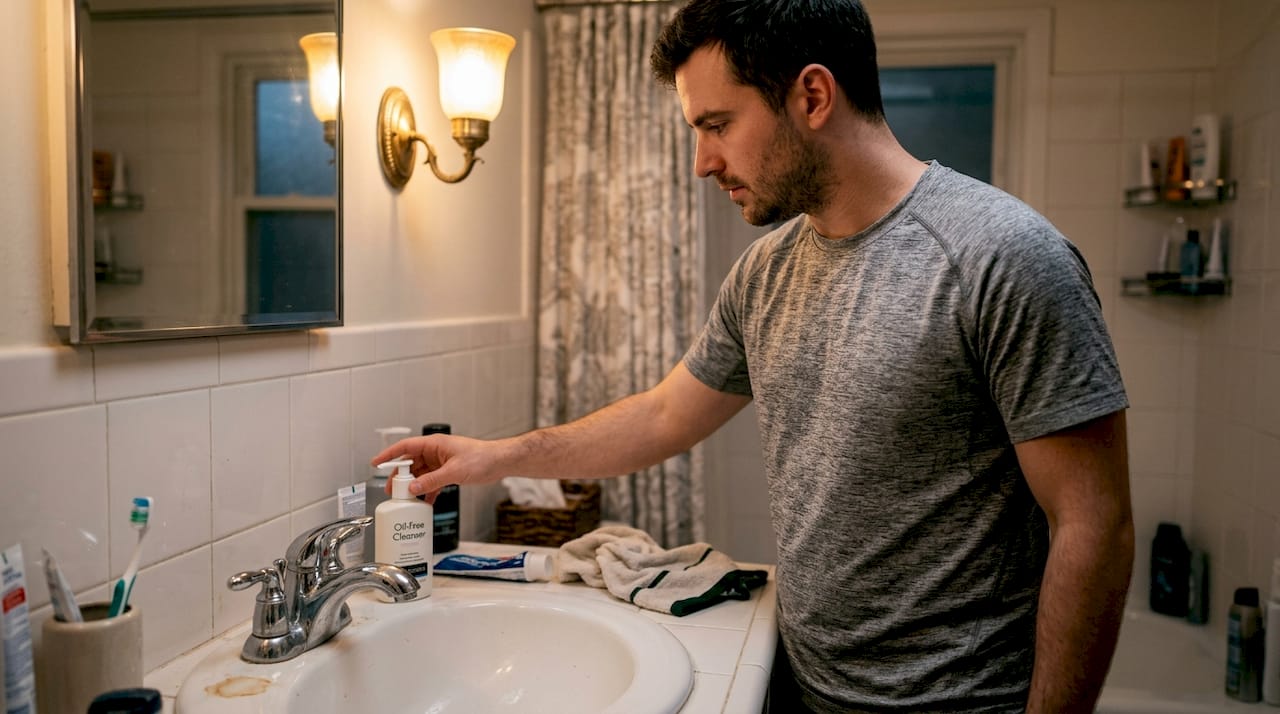
Before you start buying products, understand what your skin actually needs. Men’s skin is biologically different. It is 25% thicker and oilier, with larger pores, which means generic or harsh products can damage your skin barrier fast.
Here’s a breakdown of what a basic versus advanced routine looks like:
| Step | Basic routine | Advanced routine |
|---|---|---|
| Cleanse | Gentle face wash (AM/PM) | pH-balanced cleanser for skin type |
| Moisturize | Lightweight daily moisturizer | Niacinamide or peptide serum + moisturizer |
| Protect | SPF 30+ (AM) | SPF 50+ with antioxidants |
| Treat | Optional spot treatment | Retinoid or benzoyl peroxide (PM) |
When choosing products, keep these principles in mind:
- Look for pH-balanced formulas to protect your skin barrier
- Choose non-comedogenic products so pores don’t get clogged
- Always patch test new products on your inner arm before applying to your face
- Avoid bar soaps on your face, they strip natural oils and disrupt pH
Pro Tip: Men’s skin produces more sebum (oil) than women’s. Products labeled “oil-free” or “for oily skin” are usually your best starting point. Check out this skincare checklist for men to make sure you’re not missing anything.
Consistency over intensity is the real secret. A simple 3 to 5 minute daily routine beats an elaborate one you abandon after a week. Think of it like going to the gym: showing up every day matters more than going hard once. Use this simple men’s skincare routine as your starting framework.
Step-by-step guide: Building your daily skin routine
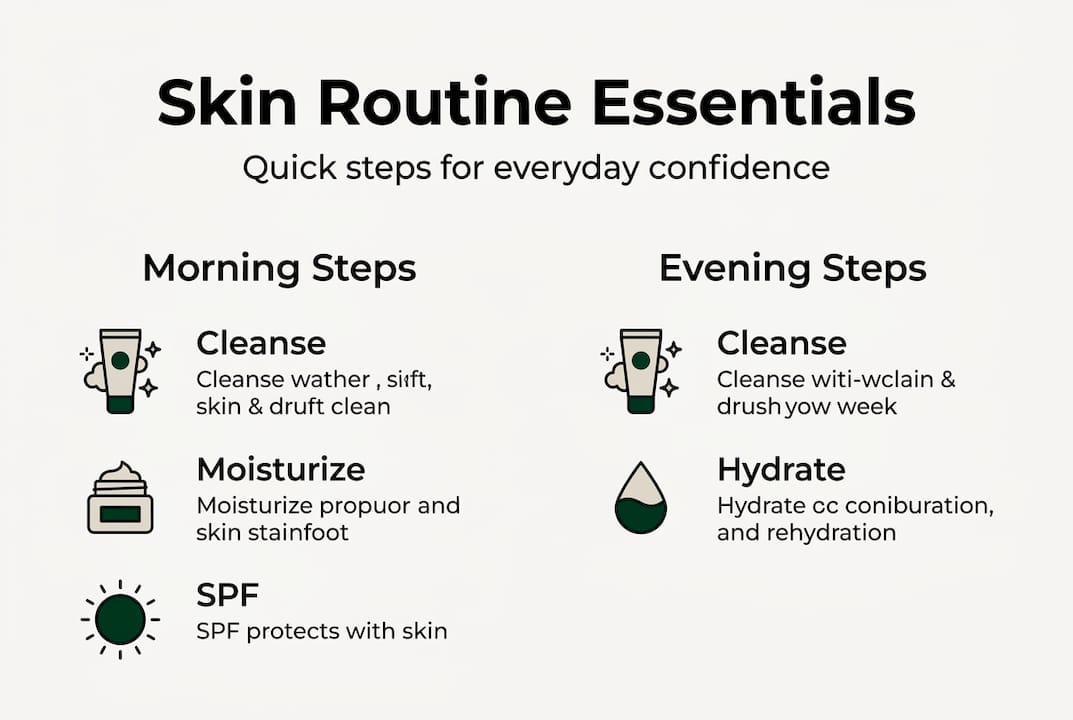
Here’s how to put it all into action. Follow these steps every day and you’ll start seeing results within weeks.
- Cleanse (AM and PM): Use a gentle, pH-balanced face wash. Wet your face with lukewarm water, apply a small amount, and rinse thoroughly. Avoid scrubbing hard.
- Moisturize (AM and PM): Apply a lightweight moisturizer while your skin is still slightly damp. This locks in hydration and strengthens your skin barrier.
- Apply SPF (AM only): Use a broad-spectrum SPF 30 or higher every single morning. This is non-negotiable.
- Treat acne-prone skin (PM): If you break out regularly, add a retinoid or benzoyl peroxide at night. Start two to three times per week to let your skin adjust.
- Adapt for sensitive skin: If you experience redness or stinging, cut back to once-daily cleansing and skip actives until your barrier recovers.
Here’s a quick reference for your daily schedule:
| Time | Steps | Expected outcome |
|---|---|---|
| Morning | Cleanse, moisturize, SPF | Hydrated, protected skin all day |
| Evening | Cleanse, treat (if needed), moisturize | Repair and renewal overnight |
| Week 4 | Full routine consistently | 80% improvement in smoothness and radiance |
| Week 4 to 12 | Add retinoid or benzoyl peroxide | Reduced breakouts and texture improvement |
Pro Tip: UV exposure causes up to 80% of visible skin aging. Skipping SPF on a cloudy day is one of the most common mistakes men make. Clouds block heat, not UV rays.
Special cases to keep in mind:
- Scarring: Use a retinoid consistently for at least 12 weeks before expecting visible fading
- Persistent acne: If breakouts don’t improve after 12 weeks of topical treatment, see a dermatologist
- Severe irritation: Stop all actives immediately and rebuild with just a cleanser and moisturizer
For more targeted advice, check out these skin care tips for men and best skin care practices that go deeper on each step.
Lifestyle habits that amplify skin confidence
Your routine is only part of the equation. What you eat, how you sleep, and how much you move all show up on your face. The good news is that small changes here create big visible results.
Key habits that directly improve skin clarity:
- Cut high-glycemic foods: Sugar and refined carbs spike insulin, which triggers oil production and breakouts. Swap white bread and soda for whole grains and water.
- Sleep 7 to 9 hours: Your skin repairs itself overnight. Cutting sleep short means cutting your skin’s recovery time short.
- Drink more water: Dehydration makes skin look dull and emphasizes fine lines. Aim for at least 8 glasses a day.
- Exercise regularly: Cardio increases blood flow to the skin, delivering oxygen and nutrients that improve your natural glow.
A low-sugar diet combined with adequate sleep and exercise reduces acne, strengthens the skin barrier, and enhances your overall glow within weeks. These aren’t long-term promises. You’ll feel the difference in your skin within the first two weeks.
Pro Tip: Start with one change at a time. Swap soda for water this week. Add a 20-minute walk three times a week next week. Small, stacked habits are easier to maintain than a complete lifestyle overhaul.
“Lifestyle habits are the foundation. Products are the finishing touch. Get the foundation right and everything else works better.”
For a deeper look at how these habits connect to your overall appearance and confidence, the link between skin health and self-image goes further than most guys expect.
Troubleshooting: Common mistakes and when to see a dermatologist
Even with the best intentions, most guys make a few mistakes early on that slow their progress or make things worse. Knowing what to avoid saves you weeks of frustration.
Mistakes to avoid:
- Over-exfoliating: Scrubbing your face daily strips the skin barrier and causes rebound oiliness and irritation. Limit exfoliation to two to three times per week maximum.
- Skipping SPF: Already covered, but worth repeating. No SPF means undoing your routine’s progress every single day.
- Using the wrong products: Heavy creams designed for dry skin will clog pores on oily skin. Match your products to your skin type.
- Switching products too fast: Give any new product at least four weeks before judging whether it works.
- Ignoring post-shave care: Shaving creates micro-tears in the skin. Always follow with a soothing, alcohol-free aftershave or moisturizer.
Pro Tip: Always patch test new products before applying them to your full face. Apply a small amount to your inner arm and wait 24 hours. If there’s no reaction, you’re good to go. If acne persists beyond 12 weeks on topicals, book a dermatologist appointment.
For severe cases, starting at a low retinoid concentration and patch testing is essential to avoid irritation rebound. Isotretinoin is reserved for severe scarring cases only after topical treatments have failed, and it requires a prescription and medical supervision.
“Isotretinoin is a last resort, not a first step. Work through topical options with a professional before going there.”
If you’re ready to take your confidence further, explore how to boost skin confidence with tools built specifically for men.
Next steps: Products and support for your skin confidence journey
You now have the full picture: why skin confidence matters, what your routine needs to include, how to build it step by step, and how to back it up with lifestyle habits that actually work. The next move is putting it into practice consistently.

Some days your skin won’t cooperate, and that’s where Norml concealer comes in. It’s a lightweight, matte formula built specifically for men that covers blemishes, redness, and dark circles in seconds without looking like anything is there. It’s not a replacement for your routine. It’s the tool you reach for when you need to look sharp right now. Check out how to use Norml products to get the most natural finish possible, and visit Norml for Men to explore everything built for your skin.
Frequently asked questions
How long until I see visible results from a new skin routine?
Most men see improved smoothness and radiance within 4 weeks of consistent daily care. Acne-specific treatments like retinoids may take up to 12 weeks for full results.
What’s the best way to handle persistent acne if topicals aren’t working?
If acne doesn’t improve after 12 weeks on recommended topicals, see a dermatologist. Options like isotretinoin after topical failure are available but require professional supervision.
Do I need different products for men’s skin compared to women’s?
Yes. Men’s skin is 25% thicker and oilier, so pH-balanced, non-comedogenic products tailored for male skin work significantly better than generic options.
Can diet and exercise really help my skin confidence?
Absolutely. A low-sugar diet and regular exercise reduce acne, improve skin barrier function, and enhance your natural glow within weeks.
Are quick fixes like concealers damaging to skin?
Non-comedogenic, well-formulated concealers are safe when used as directed. Look for pH-balanced, non-comedogenic formulas and avoid heavy, occlusive products that can clog pores.


