

What is skin tone blending? Men's guide to flawless look
You’ve probably heard that makeup is complicated, time consuming, or just not something men should bother with. That’s a myth. Skin tone blending is a simple cosmetic technique that creates a natural, even complexion by seamlessly integrating products like concealer into your skin. It hides blemishes and dark circles without anyone noticing you’re wearing anything. This guide breaks down exactly what skin tone blending is, how to choose the right shades, and the techniques that deliver effortless, confidence boosting results every time.
Table of Contents
- Understanding Skin Tone Blending: The Basics And Benefits
- Choosing The Right Shades And Products For Your Skin Type
- Techniques And Expert Tips For Flawless Blending
- Comparing Blending Methods And Products For Men
- Discover The Norml All-In-One Concealer For Effortless Skin Tone Blending
- What Is Skin Tone Blending? FAQs
Key takeaways
| Point | Details |
|---|---|
| Skin tone blending creates seamless complexion | Using makeup products to achieve even skin without visible lines or patchiness |
| Shade selection adapts to seasonal changes | Mixing lighter and darker shades compensates for skin tone shifts throughout the year |
| Pressing technique beats rubbing | Gently pressing product into skin prevents patchiness and creates natural finish |
| Color correctors target specific issues | Peach or orange tones neutralize dark circles before applying concealer |
| Right tools improve blending results | Sponges deliver more natural finish than fingers for most skin types |
Understanding skin tone blending: the basics and benefits
Skin tone blending is the technique of seamlessly integrating makeup products into your skin to create an even complexion. The goal is simple: make blemishes, redness, and dark circles disappear without visible edges or lines. Skin tone blending in cosmetics refers to seamlessly integrating foundation, concealer, or tints into skin for a natural look.
The main products involved are foundation, concealer, and tinted formulas. Foundation evens out overall skin tone. Concealer targets specific spots like blemishes or under eye circles. Tints offer lighter coverage for subtle enhancement. Each product works differently, but the blending principle stays the same: match your natural skin tone and apply so the product becomes invisible.
Why does blending matter? Without proper blending, makeup sits on top of your skin like a mask. You get harsh lines, uneven patches, and an obvious artificial appearance. Good blending makes the product part of your skin. It enhances what’s already there rather than covering it up.
For men specifically, blending is about effortless enhancement. You want to look sharper and more even without anyone knowing you’re wearing anything. That requires products that match your exact skin tone and techniques that make them disappear. The payoff is immediate: clearer complexion, reduced appearance of imperfections, and boosted confidence in how you present yourself.
Here’s what effective skin tone blending accomplishes:
- Conceals blemishes and dark circles naturally
- Evens out redness and discoloration
- Creates seamless transitions between treated and untreated areas
- Maintains skin texture without looking heavy or cakey
- Delivers results that hold up under different lighting conditions
Mastering step by step concealer routine techniques helps you apply these principles consistently. The difference between amateur and professional results often comes down to blending execution, not the products themselves.
Choosing the right shades and products for your skin type
Shade matching determines whether your blending looks natural or obvious. The wrong shade creates a mask effect that highlights rather than hides imperfections. Your natural skin tone is the baseline, but it changes throughout the year.

Seasonal skin tone shifts require mixing two shades for perfect matches. In winter, your skin lightens. In summer, sun exposure darkens it. Having both a lighter and darker shade lets you adjust your blend as needed. Mix them together to match your current tone perfectly.
Skin type dictates which formulas work best. Oily skin needs mattifying primers and oil free concealers that won’t slide off or create shine. Dry skin requires hydrating formulas with moisturizing ingredients that prevent flaking or settling into fine lines. Using the wrong formula for your skin type makes blending harder and results less natural.
Testing is critical. Always test shades on your jawline in natural light, not artificial store lighting. Your jawline shows your true skin tone better than your hand or wrist. Natural light reveals how the product actually looks in real world conditions. Indoor lighting can make shades appear different than they will outside.
Pro Tip: Take a photo of the test shade on your jawline in natural light. If you can’t see where the product ends and your skin begins in the photo, you’ve found your match. If there’s a visible line or color difference, keep testing.
Here’s how to select shades strategically:
- Choose a shade that disappears into your jawline completely
- Get one shade lighter and one darker for seasonal mixing
- Test multiple brands since shade names aren’t standardized
- Prioritize undertone match over surface color match
- Consider how the shade looks after 2-3 hours of wear
Undertones matter as much as surface color. Your undertone is the subtle hue beneath your skin: warm (yellow or golden), cool (pink or red), or neutral (balanced mix). Match your product’s undertone to your skin’s undertone. A perfect surface match with wrong undertones still looks off.
The relationship between men’s skincare and makeup shows how proper product selection amplifies both. Good skincare creates the base. Right shade selection ensures makeup enhances rather than masks that base.
Techniques and expert tips for flawless blending
Blending technique separates natural results from obvious makeup. The core principle: less is more. Perfect matches disappear with minimal blending when you’ve chosen the right shade. Overworking product breaks down coverage and creates patchiness.
Pressing beats rubbing every time. Apply product in small amounts, then gently press it into skin with your fingertip or tool. Pressing pushes product into pores and texture, creating seamless integration. Rubbing spreads product across the surface, leaving visible edges and uneven coverage.
Color correctors handle specific imperfections before you blend concealer. Dark circles often have blue or purple tones. Applying peach or orange correctors underneath neutralizes those tones. Then concealer blends over the corrected area for natural coverage. Without correction, you need heavy concealer that looks cakey.
Start with thin layers. You can always add more product, but removing excess is messy and disrupts what you’ve already blended. Apply a small dot, blend it out completely, then assess. Add another thin layer only if needed. Three thin layers blend better than one thick application.
Pro Tip: Warm product between your fingers before applying. Body heat makes formulas more pliable and easier to blend seamlessly. Cold product sits on skin rather than melting into it.
Here are essential blending techniques:
- Dot product only on areas needing coverage, not everywhere
- Blend outward from the center of imperfections
- Use patting motions, never wiping or dragging
- Feather edges so there’s no visible line
- Set with translucent powder only if needed for oil control
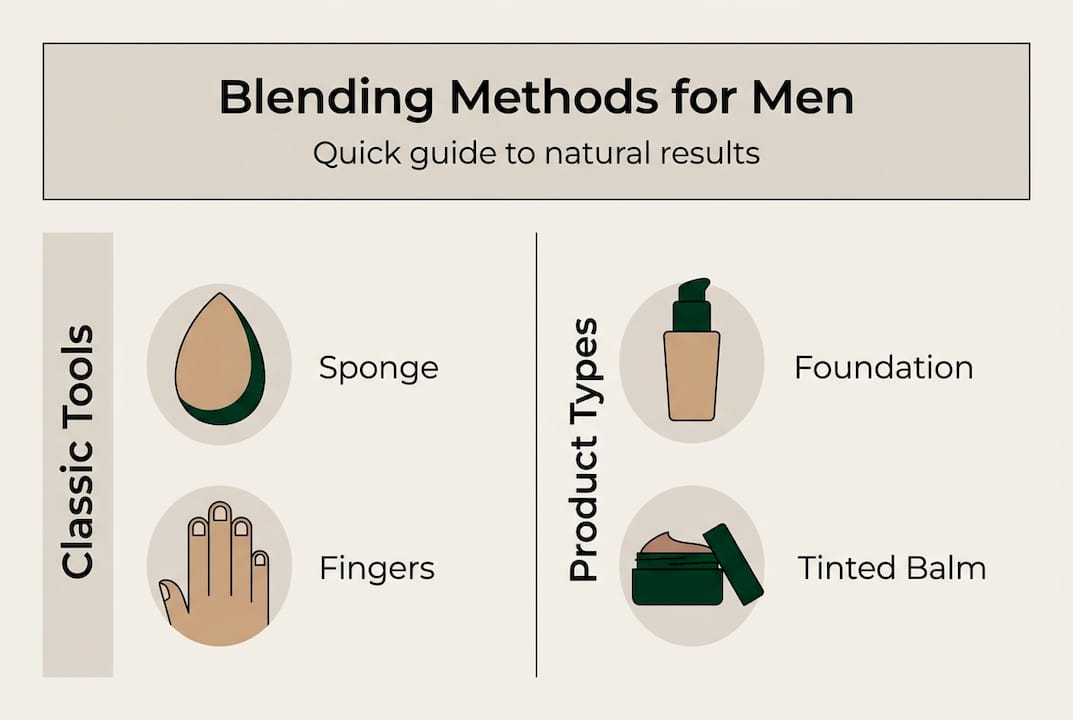
Tool selection impacts results significantly. Damp beauty sponges deliver the most natural finish for most people. The sponge absorbs excess product and creates airbrushed smoothness. Fingers work well for targeted spot concealing but can leave fingerprints or uneven patches on larger areas. Brushes offer precision but require more skill to avoid streaking.
The skin tone matching process connects directly to blending success. Perfect shade selection makes blending almost automatic. Mismatched shades require extra blending work and still look off.
Understanding why natural look matters in men’s cosmetics drives technique choices. You’re not creating a makeup look. You’re erasing imperfections while maintaining your natural appearance. Every blending decision should support that goal.
Comparing blending methods and products for men
Different blending approaches suit different needs and skill levels. Custom mixing multiple foundation shades offers perfect matches but requires more effort. Adaptive tints and concealers designed for men provide easier, faster solutions with good results.
Custom mixing involves buying 2-3 foundation shades and blending them on your hand before application. This creates an exact match for your current skin tone. The downside: it takes time, requires multiple products, and needs remixing as your skin tone changes. For men wanting quick daily routines, this adds unnecessary complexity.
Adaptive formulas are designed to adjust to your skin tone automatically. They contain pigments that react to your skin’s pH or oils, creating a customized match. These work well for men who want simplicity. You apply one product, and it adapts. The tradeoff: they may not match as precisely as custom mixing, especially for very light or very dark skin tones.
Here’s how different methods compare:
| Method | Ease of Use | Match Precision | Time Required | Best For |
|---|---|---|---|---|
| Custom mixing foundations | Moderate | Excellent | 5-7 minutes | Men with time who want perfect matches |
| Adaptive tints | Very easy | Good | 1-2 minutes | Busy men wanting quick natural results |
| Single shade concealer | Easy | Varies | 2-3 minutes | Spot treating specific blemishes |
| BB/CC creams for men | Easy | Moderate | 3-4 minutes | Light coverage with skincare benefits |
Tool selection amplifies method effectiveness. Blending tools matter more than method for achieving natural finishes. Sponges outperform fingers for most applications because they create even, airbrushed coverage without absorbing too much product.
For oily skin, mattifying formulas with oil absorbing ingredients prevent shine and extend wear time. These blend best with sponges dampened with setting spray rather than water. For dry skin, hydrating concealers with hyaluronic acid or glycerin prevent flaking. Fingers warm these formulas and help them melt into skin better than sponges.
Key considerations for choosing your approach:
- Daily time available for application and blending
- Skin type and specific concerns like oiliness or dryness
- Desired coverage level from sheer to full
- Skill level and comfort with cosmetic application
- Budget for single vs. multiple products
Men with active lifestyles benefit from long wear formulas that resist sweat and oil. These require more deliberate blending since they set quickly, but they maintain coverage through workouts or long days. Standard formulas blend more easily but may need touch ups.
The connection between effective skin care and blending success is direct. Well moisturized, exfoliated skin provides a smooth canvas. Products blend seamlessly on healthy skin. Dry, flaky, or textured skin makes even perfect shade matches look patchy.
Understanding facial enhancement fundamentals helps you choose methods aligned with your goals. If you want barely there coverage that just evens tone, adaptive tints work great. If you need to cover significant blemishes or discoloration, custom mixing or targeted concealing delivers better results.
Discover the Norml All-In-One Concealer for effortless skin tone blending
If you want skin tone blending without the complexity, the Norml All-In-One Concealer simplifies everything. It’s specifically designed for men who want natural coverage fast. The formula blends seamlessly to hide blemishes, dark circles, and redness in seconds.

What makes Norml different is the multitasking formula. It works as color corrector, concealer, and skin tone evener in one product. You don’t need multiple steps or products. Apply, press to blend, and you’re done. The lightweight, matte finish looks like your skin, not makeup.
The shade range accounts for different skin tones and undertones, making matching straightforward. For best results, follow the step by step concealer routine to maximize coverage and blending. Norml gives you the confidence of flawless skin without anyone knowing you’re wearing anything.
What is skin tone blending? FAQs
What exactly does skin tone blending involve?
Skin tone blending involves applying makeup products like concealer or foundation and seamlessly integrating them into your skin so there are no visible edges or color differences. The technique uses pressing motions and proper tools to make products disappear into your natural complexion. Done correctly, it hides imperfections while maintaining your skin’s natural texture and appearance.
How can men choose the right product shades effectively?
Test shades on your jawline in natural daylight, not on your hand or in store lighting. The right shade disappears completely into your skin with no visible line. Buy one shade lighter and one darker than your match so you can mix them as your skin tone changes seasonally. Match undertones (warm, cool, or neutral) as carefully as surface color.
What are the best tools for blending makeup naturally?
Damp beauty sponges deliver the most natural, airbrushed finish for most men. They absorb excess product and create seamless coverage without streaking. Fingers work well for warming product and spot concealing small blemishes. Brushes offer precision but require more skill to avoid visible brush marks or uneven application.
Can skin tone blending really look natural on men?
Absolutely, when you use the right shade and blending technique. The key is choosing products that match your exact skin tone and undertone, then pressing them into skin rather than rubbing. Proper blending makes makeup invisible, enhancing your appearance without anyone noticing you’re wearing anything. Many men use natural concealer techniques daily with completely undetectable results.
How do color correctors improve the results of skin tone blending?
Color correctors neutralize specific discolorations before you apply concealer, reducing the amount of concealer needed for coverage. Peach or orange correctors cancel out blue and purple tones in dark circles. This lets you use a thin layer of concealer that blends naturally instead of heavy coverage that looks obvious. Apply corrector first, blend it, then add concealer on top for seamless results.
Do I need different blending techniques for different skin types?
Yes, skin type affects both product choice and blending method. Oily skin needs mattifying formulas blended with damp sponges to control shine and prevent sliding. Dry skin requires hydrating products warmed between fingers to prevent flaking and settle smoothly. Combination skin may need different techniques for different face areas, using mattifying products on oily zones and hydrating ones on dry patches.


