

Why Men Avoid Makeup Look: the Real Reasons
TL;DR:
- Men’s reluctance to wear makeup is rooted in historical gender norms and social conditioning that associate cosmetics with femininity.
- Recent social media trends and reframing makeup as maintenance are gradually normalizing subtle grooming practices among men, especially younger generations.
Most men will fix a bad haircut, buy a better shirt, and spend real money on a gym membership. But the suggestion that they might use a concealer to cover a breakout or dark circles? That’s where things get complicated. Understanding why men avoid makeup look isn’t as simple as “men are vain” or “men are insecure.” The real picture is shaped by centuries of cultural programming, social pressure, and some genuinely outdated ideas about what it means to be masculine. This article breaks it all down.
Table of Contents
- Key takeaways
- Why men avoid makeup look: the cultural history
- Psychological and social barriers men face
- How social media is changing male makeup attitudes
- Common myths about men and makeup
- Practical steps for men hesitant to start
- My take on where this is all heading
- Look better in seconds with Norml4men
- FAQ
Key takeaways
| Point | Details |
|---|---|
| Culture shaped avoidance | Men’s reluctance to use makeup is rooted in historical gender norms, not personal weakness or disinterest. |
| Fear of judgment drives hesitation | Makeup stigma for men comes from family, peers, and media messages that link cosmetics with femininity. |
| Social media is shifting attitudes | Platforms like TikTok are normalizing subtle grooming for men, especially among younger generations. |
| Framing changes everything | Calling makeup “maintenance” instead of vanity significantly reduces resistance among men. |
| Subtle use goes unnoticed | The goal for most men is invisible enhancement, not transformation, and that goal is entirely achievable. |
Why men avoid makeup look: the cultural history
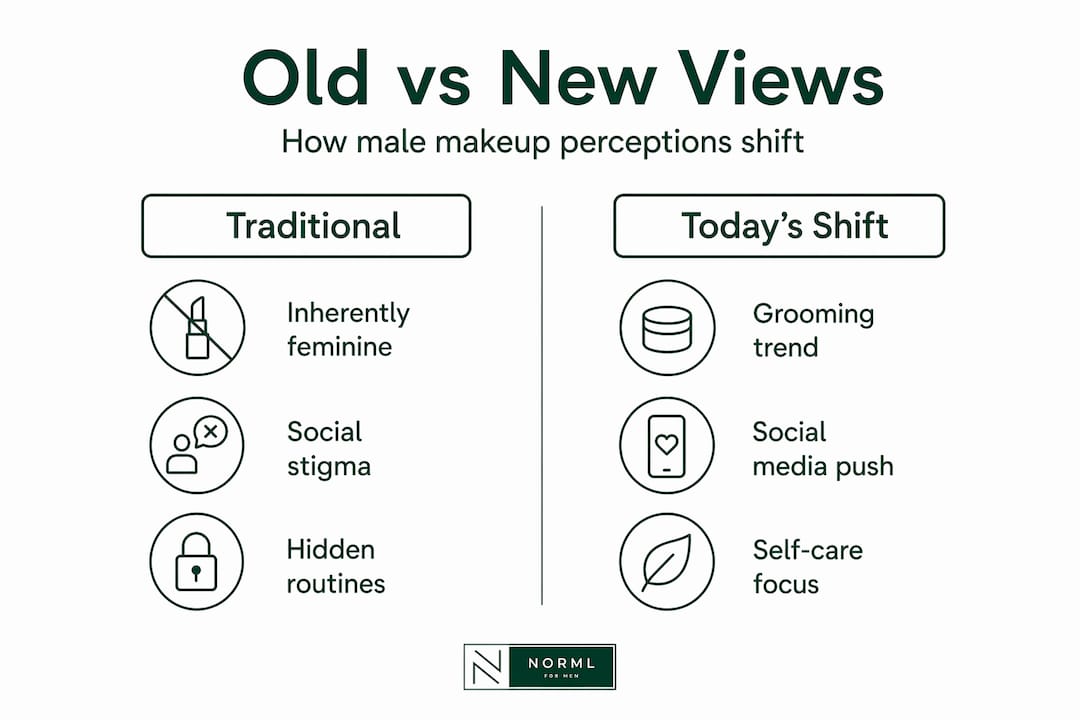
Before you assume men avoiding beauty products is some universal truth, know this: for most of human history, men wore makeup without it being remotely controversial. Ancient Egyptian men wore kohl around their eyes. Aristocratic European men in the 17th and 18th centuries wore powder, rouge, and even lipstick as marks of class and status. Male Roman gladiators used cosmetics. The idea that makeup is inherently feminine is actually quite recent.
What changed was industrialization. As labor shifted to factories and social hierarchies reorganized around productivity and utility, the cultural idea of masculinity narrowed sharply. Looking polished became associated with the upper class or the feminine. Working men were expected to look rugged. That association stuck.
Here’s what that history left behind in modern culture:
- The hygiene ceiling. Men are broadly accepted using products that stop at hygiene: soap, deodorant, maybe moisturizer if it’s marketed aggressively enough. Anything beyond that is viewed as excess.
- The femininity trap. Makeup became strongly gender-coded as feminine through advertising, retail environments, and social conditioning. Men absorbed the message that wearing it signals something about their identity they didn’t choose.
- The peer accountability factor. Male social groups tend to police appearance norms more rigidly than outsiders assume. Teasing or side-eyes from other men carry significant social weight.
- The media loop. For decades, the men presented as desirable in film and television looked naturally perfect. No discussion of what it took to get there, which reinforced the idea that good skin just happens.
Male makeup attitudes today still carry all of this baggage, even among men who consciously reject other gender stereotypes. That’s how deeply grooming norms run.
Psychological and social barriers men face
The reasons men dislike makeup or avoid it entirely go beyond simple preference. There’s a real psychological architecture underneath that avoidance, and it’s worth taking apart.
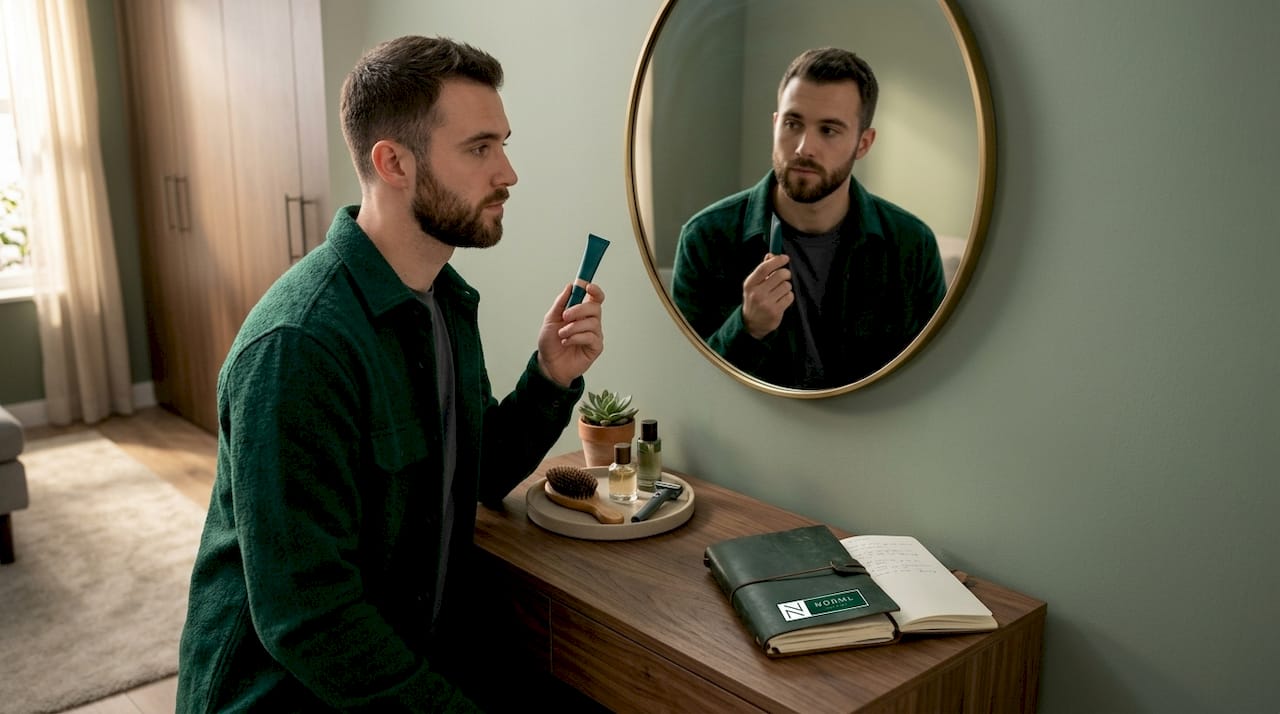
The biggest driver is identity. Masculine identity often conflicts with how makeup is perceived, especially for men raised in environments where grooming was limited to shaving and showering. If you grew up in a household where the message was “real men don’t fuss,” wearing concealer can feel like a betrayal of something you were taught mattered.
Fear of judgment runs a close second. Specifically, fear of appearing either feminine or non-heteronormative. These fears are often subconscious and don’t require a person to actually hold those biases. The social signal is what matters. Men who wouldn’t blink at someone else wearing concealer still hesitate to do it themselves because they’re imagining how others will read them.
Here’s where the social reinforcement gets interesting:
- Family messaging. Comments from parents or older relatives about “that’s not for boys” leave lasting impressions.
- Peer ridicule. Even mild, offhand comments from friends about looking “done up” can shut down experimentation fast.
- Media portrayals. Male characters who wear visible makeup in film are often coded as villainous, comedic, or weak. The signal is consistent and cumulative.
- Generational pressure. The generational divide is significant. Older men tend to hold more rigid views, and those views shape the environments younger men grow up in, even if those younger men personally reject the binary.
What actually moves the needle psychologically is reframing. When makeup is positioned as maintenance rather than vanity, the resistance drops noticeably. Think about it: nobody questions a man using eye drops to reduce redness, or using chapstick to keep lips from cracking. A matte concealer that covers a blemish operates on the same logic. It’s corrective, not decorative.
Pro Tip: If the word “makeup” creates friction for you, just don’t use it. Call it your skincare finish, your grooming routine, or just “the thing I use.” The product doesn’t care what you call it, and neither should you.
Research backs this reframing approach. Men applying makeup reported higher perceptions of feeling warm, likable, and pleasant without any increase in anxiety. The fear going in is often worse than the reality.
How social media is changing male makeup attitudes
The shift happening right now is real and worth paying attention to. The #mensgrooming hashtag on TikTok has surpassed 26 billion views. That’s not a niche number. That’s a mainstream cultural conversation happening in real time, and it’s normalizing what used to be considered off-limits for men.
The content driving that conversation tends to be practical rather than performative. Male creators showing a quick skin routine, a subtle concealer application, or just being honest about having bad skin days. No drama, no transformation reveals. Just normal grooming presented as normal grooming.
| Platform trend | What it signals |
|---|---|
| #mensgrooming at 26B+ TikTok views | Mainstream male interest in appearance care |
| Gen Z men rejecting gender-coded marketing | Preference for neutral, functional product branding |
| Male influencers posting skincare routines | Normalization of grooming as a daily habit, not an event |
| Ulta and Sephora stocking men’s sections | Retail validating male consumer demand for cosmetics |
The younger side of the 18-35 demographic is genuinely more comfortable with this. Gen Z men reject gender-coded marketing and gravitate toward products that look and feel functional rather than decorative. The men’s concealer market is projected to reach $459M by 2032 with a 7.4% CAGR. That’s not driven by a fringe group. That’s driven by millions of regular men quietly deciding they’d like to look better.
One thing to watch: social media also spreads appearance anxiety. The same platforms normalizing grooming are also home to communities that push extreme appearance ideals. The goal isn’t to swap one form of pressure for another. It’s to find what actually helps you feel confident without turning it into a performance. Learning more about how social media shapes beauty trends for men can help you separate the useful signal from the noise.
Common myths about men and makeup
Men and makeup perceptions are riddled with myths. Here’s what the evidence actually says versus what most people assume.
| The myth | The reality |
|---|---|
| Makeup is inherently feminine | Men wore makeup for thousands of years before gender-coding changed |
| Women don’t want men who wear makeup | Confidence matters more than the product; owning the choice reads as attractive |
| It’s obvious when a man wears concealer | Subtle application is genuinely invisible; the goal is no one noticing |
| Only insecure men use makeup | Self-care and confidence are the primary motivators, not insecurity |
| You need to know a lot to use it | A single product used correctly is enough for most results |
The biggest myth might be that makeup use is about covering up who you are. For most men who use it, it’s about showing up as the version of themselves they already feel like internally. A concealer covering dark circles from a rough week isn’t deception. It’s the same thing as ironing a shirt before a job interview.
Public opinion is catching up. Subtle grooming signals self-care and reads positively across contexts, professional, social, and romantic, when it’s done with a light touch.
Practical steps for men hesitant to start
If you’re curious but not sure where to start, that’s actually the most common place to be. Here’s a practical path forward that doesn’t require becoming someone you’re not.
- Start with skincare. Before anything else, a consistent cleanser and moisturizer will improve your baseline significantly. Makeup works better on skin that’s already cared for.
- Pick one product. A lightweight concealer designed for men is the easiest entry point. Not foundation. Not a full routine. One product for specific issues like blemishes, redness, or dark circles.
- Check the packaging. Products with masculine, functional packaging reduce the psychological friction significantly. Matte, compact, neutral designs are easier to keep in a bag or on a shelf without it feeling conspicuous.
- Apply less than you think you need. The goal is invisible enhancement. A small amount blended well beats a visible layer every time. If you can see it, you’ve used too much.
- Find male-specific tutorials. There are plenty of male creators showing exactly how to apply concealer in under two minutes. Start there before assuming it’s complicated.
Pro Tip: Apply concealer with your ring finger rather than an applicator when starting out. It warms the product slightly and gives you more control over how much you’re using, which reduces the risk of over-application.
A beginner’s approach to natural-looking makeup for men doesn’t need to be a big production. It’s a small addition to what you already do. Check your men’s grooming options for 2026 to find products and routines that fit where you actually are.
My take on where this is all heading
I’ve watched the conversation around men and makeup shift more in the last four years than in the previous twenty. And what strikes me isn’t the dramatic moments, the celebrity endorsements or runway looks. It’s the quiet normalization happening in ordinary men’s daily routines.
What I’ve learned from watching this space is that the men who benefit most from subtle grooming products aren’t the ones trying to make a statement. They’re the ones who just want to show up looking sharp without anyone knowing exactly why. That’s a completely reasonable goal, and it’s more common than the loudest voices on either side of this debate would have you believe.
The stigma isn’t gone. Let’s not pretend it is. Older generations still carry rigid ideas about what grooming looks like for men, and peer pressure in certain environments can still make this feel like a bigger deal than it is. But the trend lines are clear. Younger men are less bothered by gender binaries, and the products getting built for them reflect that.
My honest opinion is that the reframing matters more than the product. The men who struggle most are the ones trying to reconcile “I want to look better” with “makeup is not for me.” Once you drop the label and just ask what actually works, the answer gets a lot simpler. A good concealer is a tool. So is a razor. Neither one says anything about who you are.
— Ford
Look better in seconds with Norml4men
If you’ve read this far, you’re probably already past the hardest part: deciding it’s worth considering. Norml4men was built specifically for men who want results without the drama. The Norml All-In-One Concealer covers blemishes, redness, and dark circles in seconds. It’s lightweight, matte, and formulated to blend into your skin so naturally that no one will know you’re wearing anything. No learning curve. No feminine packaging sitting on your shelf. Just a practical product that makes you look sharper, more rested, and more even in the time it takes to brush your teeth. For men curious about subtle makeup with real confidence, this is the logical first move.
FAQ
Why do most men avoid wearing makeup?
Most men avoid makeup due to deep-rooted cultural conditioning that links cosmetics with femininity, combined with fear of judgment from peers and family. The stigma is social and psychological, not a reflection of personal values or preferences.
Is it becoming more acceptable for men to wear makeup?
Yes. The #mensgrooming conversation on TikTok has surpassed 26 billion views, and younger men are increasingly comfortable with subtle grooming products as part of a regular routine.
What is the best way for a man to start using makeup?
Start with a single, lightweight concealer designed for men’s skin and apply it sparingly to specific areas like blemishes or dark circles. The goal is invisible enhancement, not visible coverage.
Does wearing makeup affect how men are perceived?
Research shows that men who wear subtle makeup are perceived as warmer and more likable without any increase in social anxiety. Confidence in the choice matters more than the product itself.
What type of makeup product works best for men new to grooming?
A matte, skin-tone concealer with neutral or masculine packaging is the easiest starting point. Products specifically formulated and marketed for men reduce the psychological barrier and tend to perform better on men’s skin texture and tone.


